Innovation – Course Syllabus Optimization
An ideal course syllabus not only helps instructors effectively connect course content planning, teaching activity arrangements, and learning assessment design, but also provides students with clear guidance on the learning abilities they are expected to demonstrate or develop throughout the course. Teaching should emphasize the quality of student learning rather than the quantity of instruction. In alignment with the university’s promotion of learning outcomes–centered course evaluation, course objectives in each syllabus have been incorporated into the Final Course Questionnaires starting from the 111-1 semester.
-
Writing Course Objectives
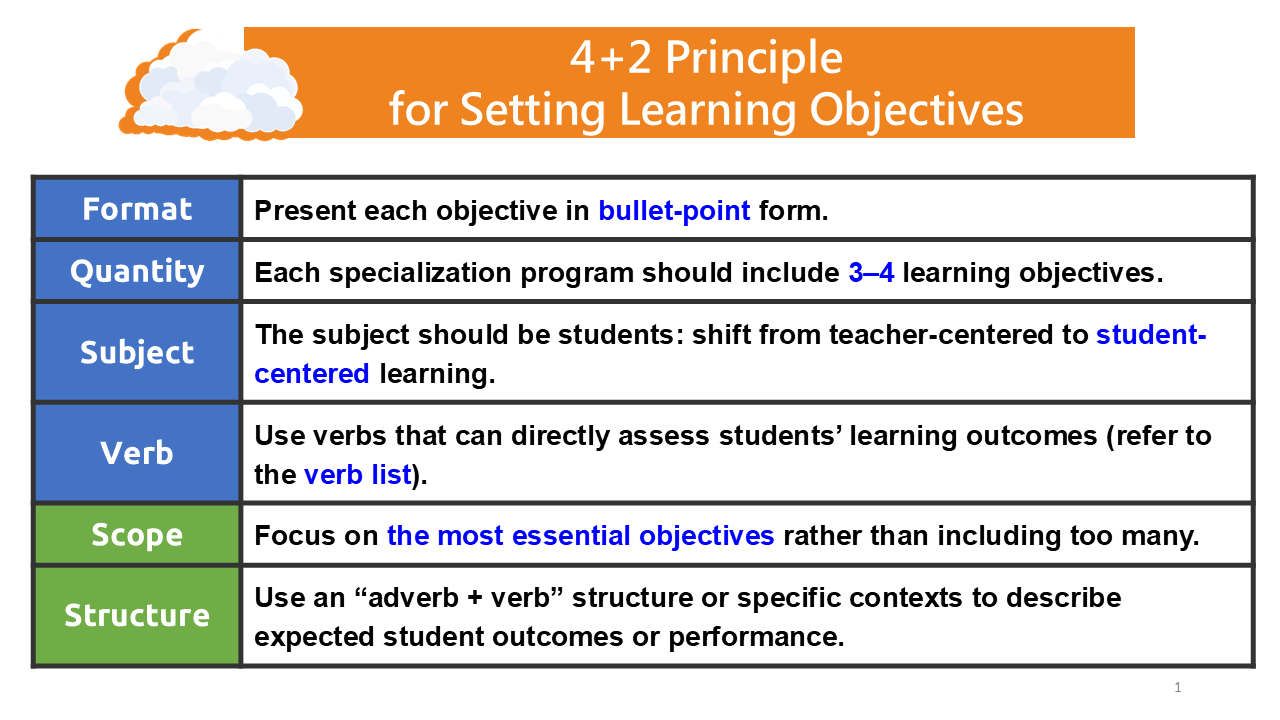
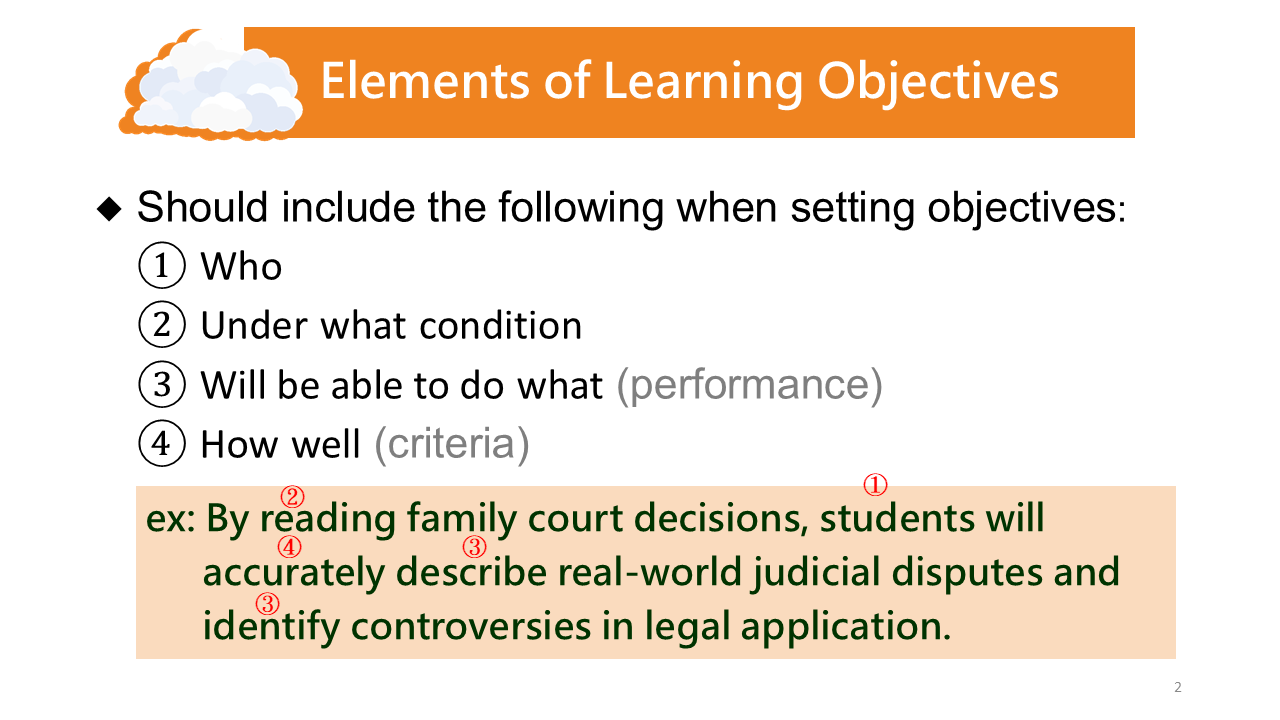
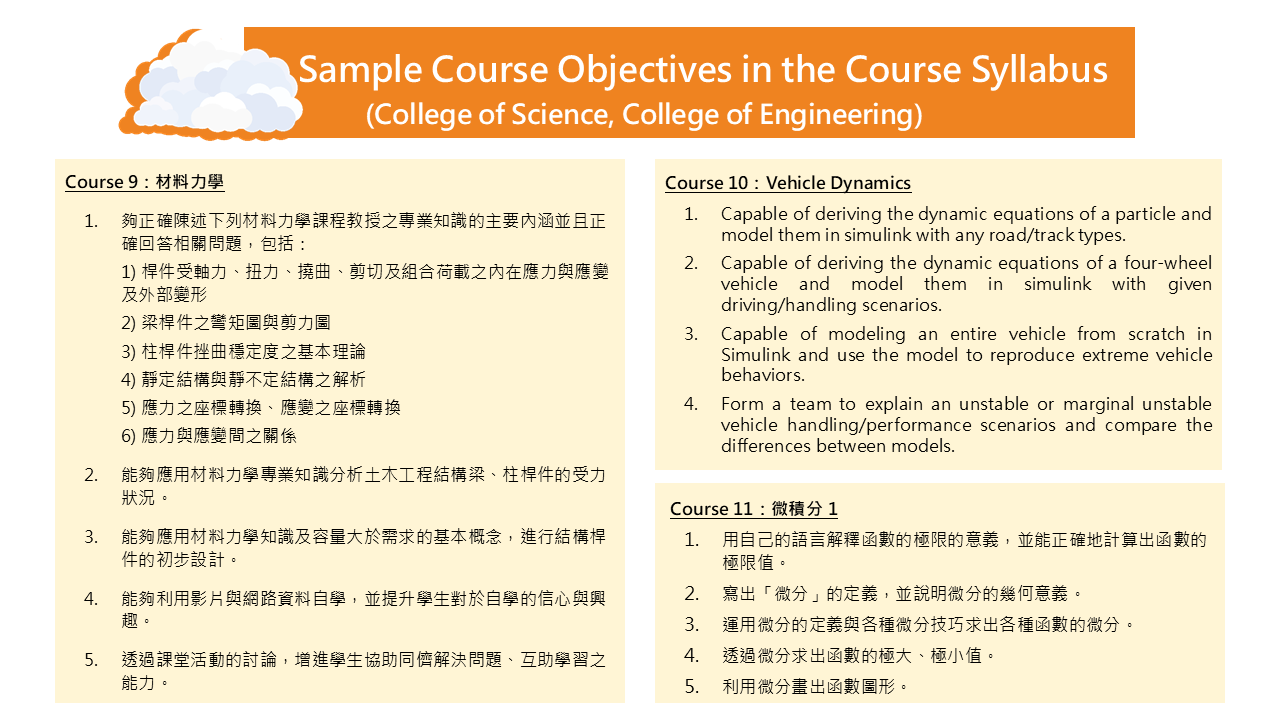
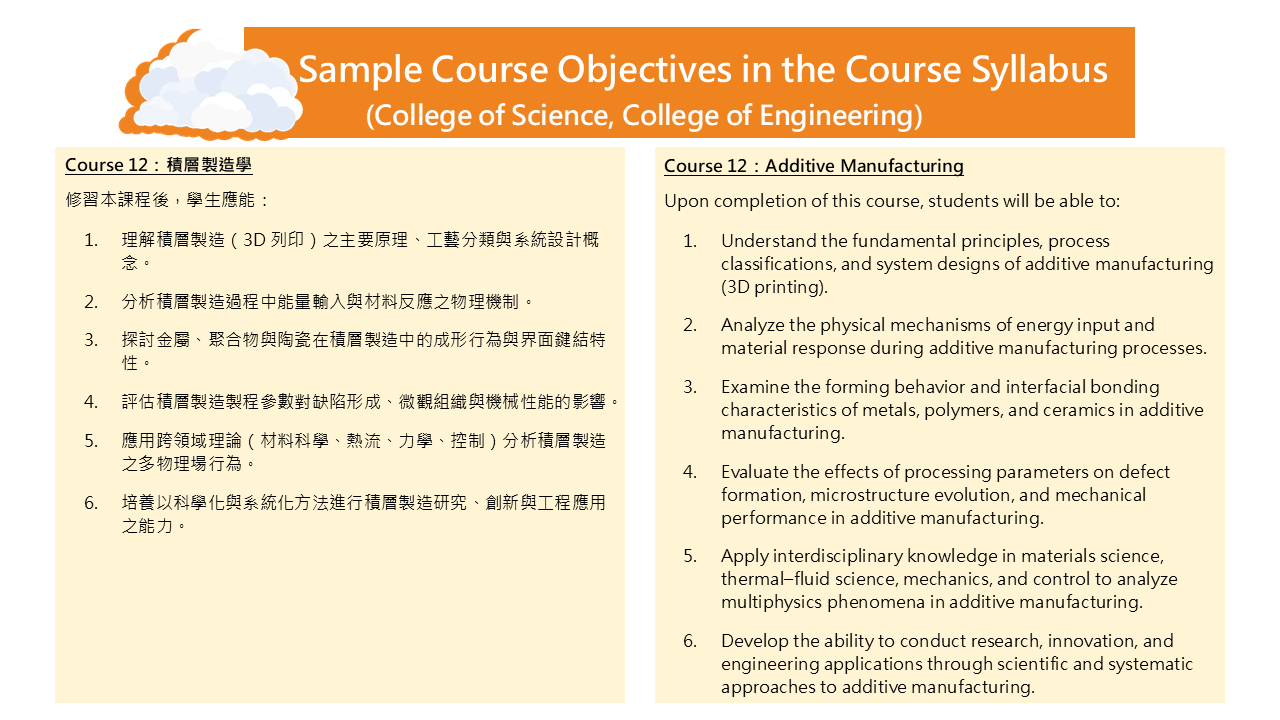
Course objectives should be written from the perspective of student learning outcomes, clearly listing the expected student learning performance and achievements in the course. To help instructors formulate clear and specific course objectives, the following principles are provided for reference:
1. Quantity: Course objectives should focus on quality rather than quantity and should consider reasonable learning hours. For a two-credit course, 3–4 objectives are more appropriate.
2. Format: Present each objective in bullet-point form, with each point focusing on one objective.
3. Verb Selection: Use verbs that can be directly assessed as learning outcomes, such as “illustrate,” “operate,” or “analyze.” Avoid verbs like “recognize” or “understand,” which describe learning processes rather than measurable results.
4. Sentence Structure: Using an “adverb + verb” structure can better highlight the expected learning state, such as “clearly illustrate,” “independently operate,” or “accurately analyze.”
-
Determining Learning Hours
The learning hours for each course include both in-class learning time and study hours before and/or after class. In-class learning time refers to class time, while study hours before and/or after class include activities such as practice exercises, watching digital materials, reading texts, group discussions, data collection, report writing, hands-on practice, and other learning activities conducted outside of in-class learning time. It is recommended that instructors consider the course credit value when designing learning activities. Doing so allows instructors to determine the appropriate number of learning hours students are expected to devote to the course. Indicating expected weekly study hours before and/or after class in the syllabus helps students plan their course workload effectively.
In principle, the recommended ratio of in-class learning time to study hours before and/or after class is 1:2. Therefore, for a two-credit course, a reasonable and ideal study hours before and/or after class would be 4 hours.
Related Resources